AI Wearables: The Next Evolution of Personal Health, Productivity, and Human Enhancement (2025 Edition)

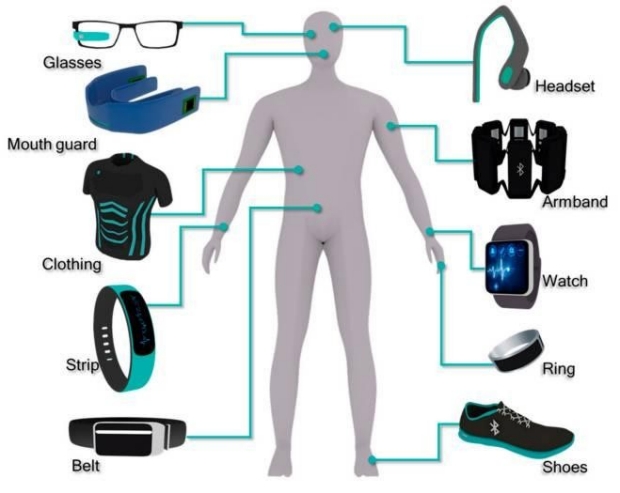
AI-powered wearables have rapidly evolved from simple fitness trackers to highly intelligent, always-on personal assistants that can monitor health, interpret data, predict issues, deliver alerts, guide training, improve productivity, and enhance well-being. In 2025, this category of technology—known broadly as AI wearables—is redefining how humans interact with data, their bodies, and the modern digital world.
Unlike traditional wearables, AI wearables integrate artificial intelligence, advanced sensors, machine learning, and real-time biometric monitoring to provide actionable insights instead of raw information. These devices don’t just track your steps—they interpret physiological patterns, guide your decisions, predict potential risks, and adapt to your lifestyle.
From smartwatches that detect cardiovascular abnormalities to neural wearables that boost focus, AI wearables are becoming the most personal—and powerful—technology humans carry.
This comprehensive article explores what AI wearables are, how they work, the latest innovations, their applications in different industries, their health benefits, challenges, and the future of human augmentation.
What Are AI Wearables?
AI wearables are advanced wearable devices enhanced with artificial intelligence that analyze data, make predictions, provide insights, and perform automated actions based on biometric and environmental inputs.
They include:
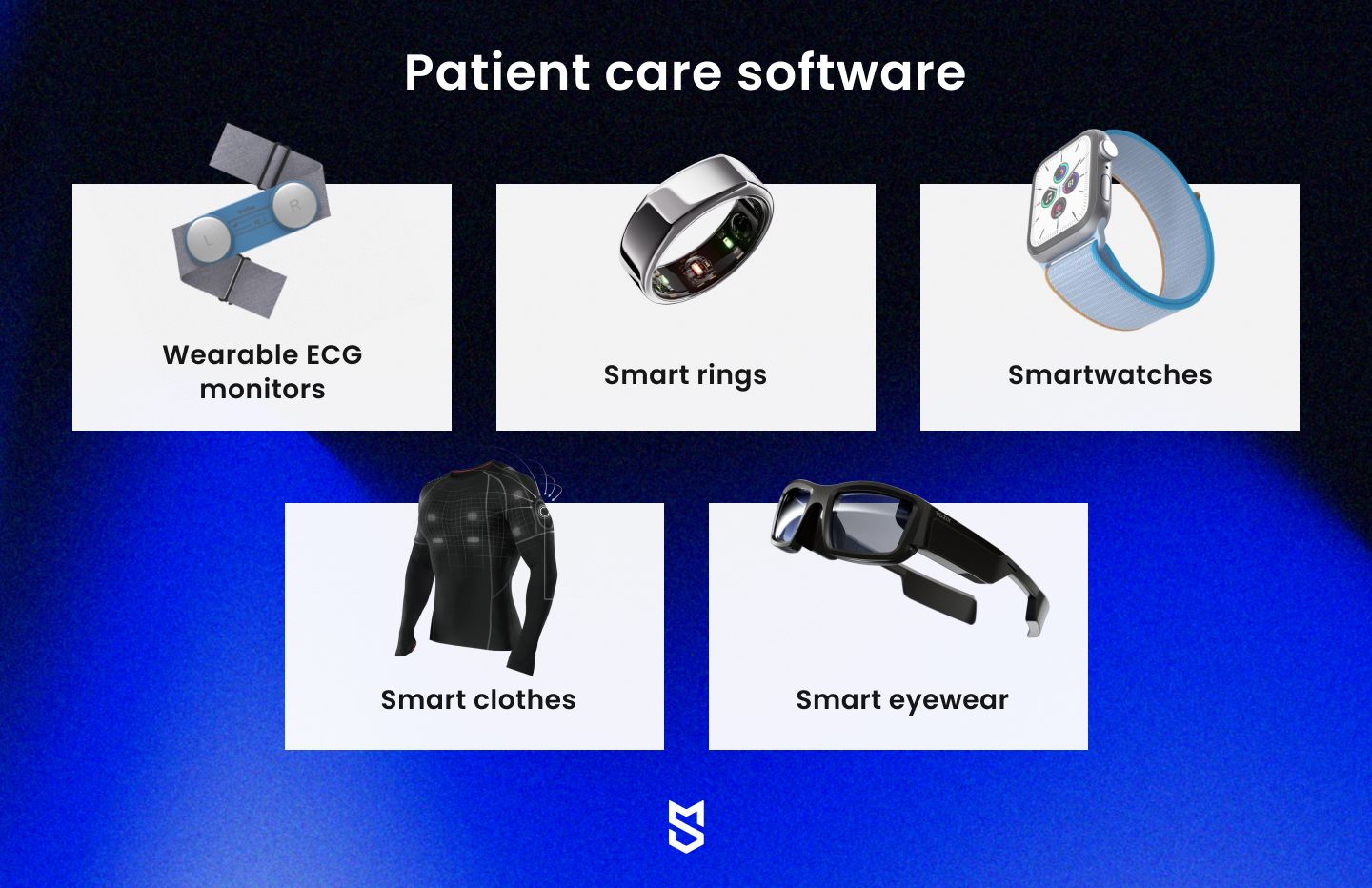
- Smartwatches
- Smart rings
- AR/VR glasses
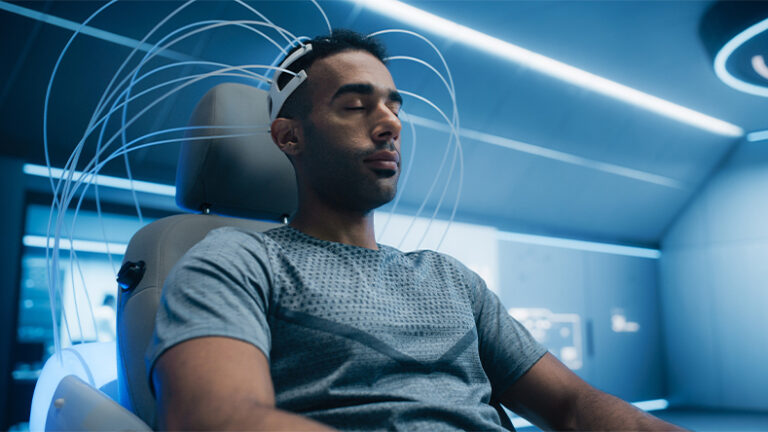
- Neurotech headsets
- Smart clothing
- Biometric patches
- Smart earbuds
- Medical-grade diagnostic wearables
AI wearables collect real-time data through sensors and use onboard or cloud-based AI models to make sense of this information with:
- Pattern recognition
- Predictive analytics
- Personalized coaching
- Health risk detection
- Contextual decision-making
These devices go beyond tracking—they interpret data like a coach, doctor, or assistant.
How AI Wearables Work
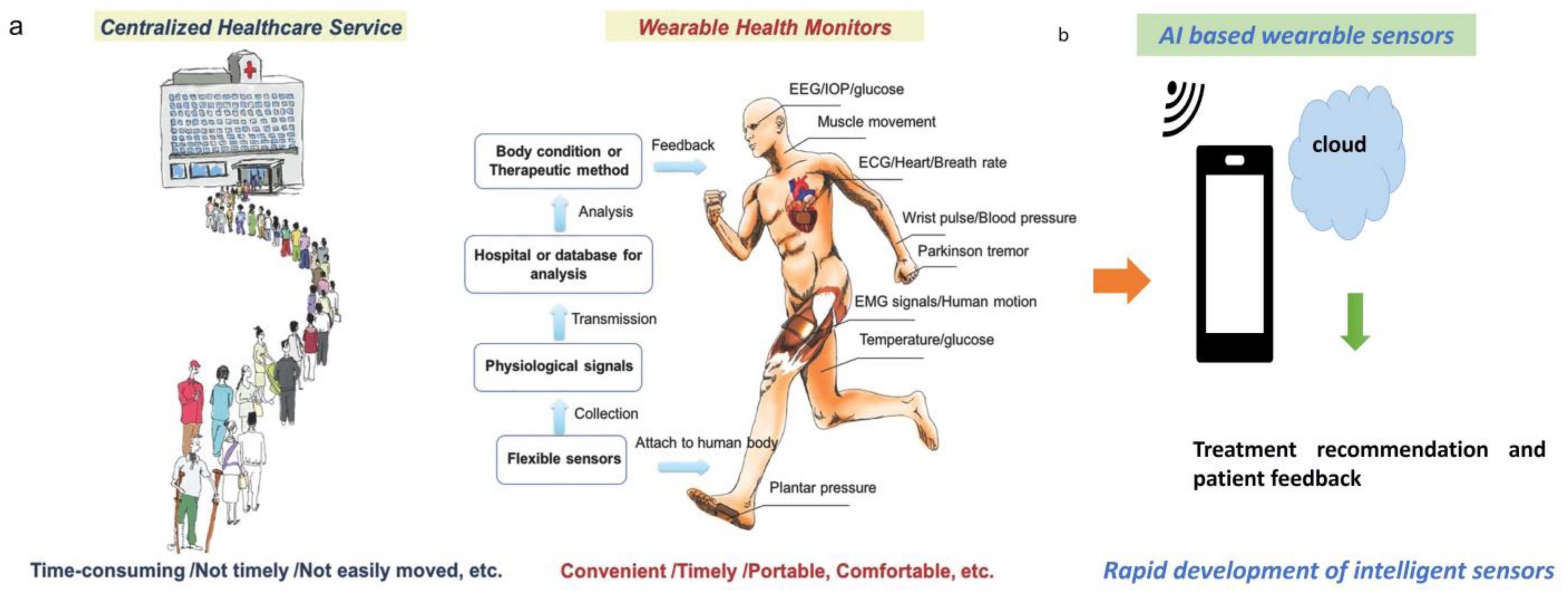

AI wearables rely on four core components:
Sensors
High-precision sensors track:
- Heart rate variability (HRV)
- Blood oxygen (SpO2)
- Temperature
- Sleep patterns
- Movement and posture
- ECG signals
- Brain activity (EEG)
- Glucose or hydration levels
- Hormonal indicators (emerging tech)
Data Processing
AI models collect and process massive amounts of data using:
- Neural networks
- Deep learning
- Predictive modeling
- Pattern recognition
Personalization Engines
These determine how the device will respond:
- Fitness recommendations
- Stress reduction techniques
- Sleep guidance
- Productivity support
- Alerts for health anomalies
User Interaction
AI wearables give insights through:
- Mobile apps
- Voice assistants
- Haptic feedback
- AR overlays
- Notifications and summaries
Types of AI Wearables


4
AI wearables cover a wide range of applications and devices.
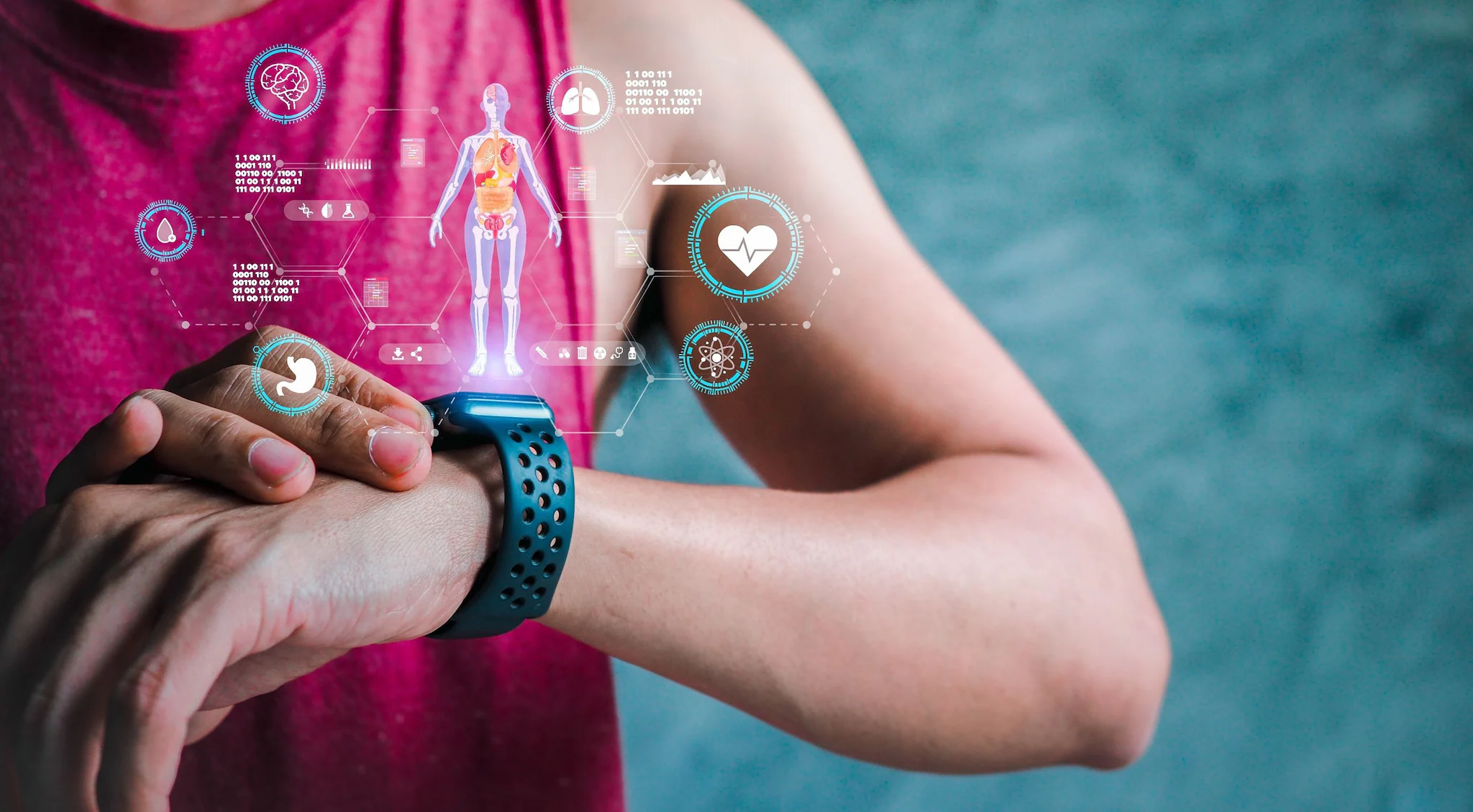
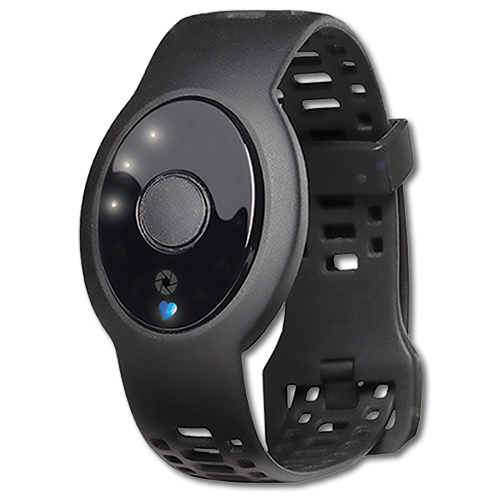
Smartwatches
Examples: Apple Watch, Samsung Galaxy Watch, Fitbit, Garmin
AI enables:
- Heart monitoring
- Atrial fibrillation detection
- Sleep optimization
- Fitness coaching
- Safety alerts
Smart Rings
Examples: Oura Ring, Ultrahuman Ring Air
Comfortable and data-accurate, ideal for:
- Sleep tracking
- Stress monitoring
- Metabolism insights
Smart Glasses (AR)
Examples: Meta Ray-Ban, XReal, Lenovo AR
AI enhances:
- Real-time translation
- Navigation
- Digital overlays
- Remote collaboration
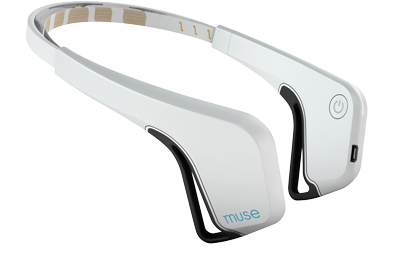
Neurotech Headsets
Examples: Muse, NeuralBand, NextMind
These measure brain activity (EEG) for:
- Focus training
- Stress reduction
- Meditation guidance
- Early neurological detection
Biometric Skin Patches
Examples: Abbott Lingo, Dexcom G7
Used for:
- Glucose monitoring
- Hydration levels
- Lactate levels
- Continuous metabolic tracking
Smart Clothing
Embedded sensors track:
- Muscle activity
- Breathing
- Posture
These devices are growing in sports and physical therapy.
Breakthrough Innovations in AI Wearables (2023–2025)
AI wearable technology has advanced more in the last two years than in the entire previous decade.
Real-Time Health Diagnostics
AI can now detect:
- Irregular heart rhythms
- Sleep apnea signs
- Fertility windows
- Hydration changes
- Early infection indicators
Digital Biomarkers
Wearables now identify predictive patterns that correlate with:
- Stress
- Illness onset
- Cognitive fatigue
- Overtraining
- Blood sugar irregularities
Non-Invasive Glucose Monitoring
The Holy Grail of wearables: measuring glucose without needles
Several prototypes are in clinical testing.
Neural Interfaces
AI can interpret brain activity to:
- Improve focus
- Reduce anxiety
- Help neurodiverse learners
- Detect cognitive disorders early
Emotion Recognition
Some wearables can detect emotional states through HRV and respiration analysis.
Early Disease Detection
AI wearables are being studied for early detection of:
- Parkinson’s
- Alzheimer’s
- Atrial fibrillation
- Sleep disorders
AI-Enhanced AR
Smart glasses now create personalized overlays for:
- Work tasks
- Daily routines
- Exercise form analysis
Applications of AI Wearables

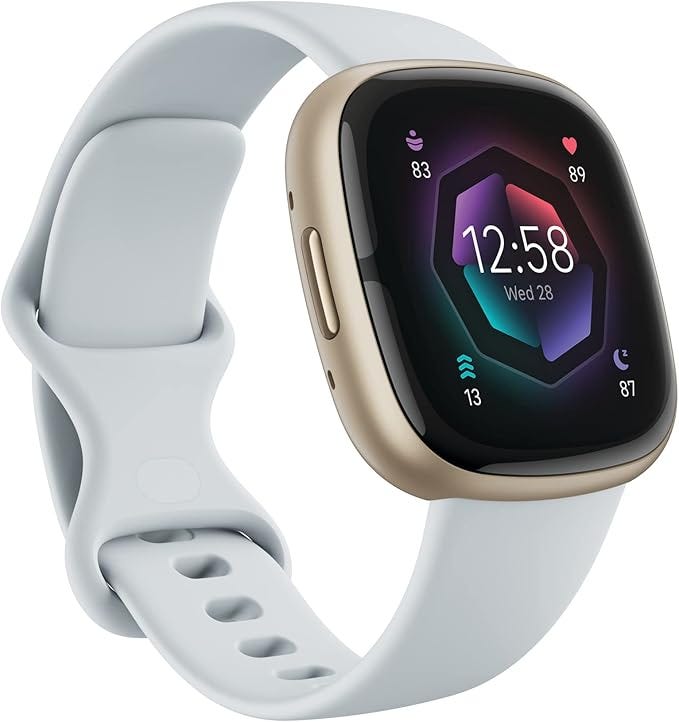

Wearable AI technology impacts nearly every part of human life.
Healthcare
Wearables are redefining modern healthcare by enabling preventive medicine.
Continuous Monitoring
AI analyzes data for:
- Heart irregularities
- Breathing patterns
- Blood sugar trends
- Early infections
- Stress spikes
Remote Patient Care
Doctors can monitor patients remotely through medical wearables.
Predictive Health Insights
AI identifies health risks before symptoms appear.
Chronic Disease Management
Used for:
- Diabetes
- Cardiovascular disease
- Sleep disorders
- Hypertension
Fitness and Sports
AI wearables help athletes and fitness enthusiasts understand their bodies.
Real-Time Coaching
Guidance on:
- Running form
- Heart zones
- Breathing
- Recovery needs
Injury Prevention
AI detects:
- Muscle imbalances
- Overtraining
- Movement anomalies
Performance Optimization
Analyzes:
- VO₂ max
- Metabolic rate
- Lactate thresholds
Workplace Productivity
AI wearables support efficiency and safety.
Focus Enhancement
Neurotech headbands help users maintain productivity.
Stress Monitoring
Workload insights for mental well-being.
Worker Safety
AI patches detect fatigue or dangerous conditions in:
- Factories
- Warehouses
- Construction sites
Sleep and Mental Health
AI wearables offer deeper insights into mental wellness.
Sleep Optimization
Track:
- REM cycles
- Circadian rhythm
- Bedtime routines
Stress and Anxiety Insights
Wearables can measure physiological stress responses.
Meditation Coaching
Neurofeedback helps regulate emotional states.
Fashion and Lifestyle
Smart clothing and accessories combine style with technology.
Adaptive Clothing
Changes temperature based on body needs.
Smart Jewelry
AI rings and pendants measure biometrics discreetly.
Body Posture Correction
Smart shirts correct posture using gentle haptic reminders.
Medical-Grade Wearables
These are approved or being studied for regulated medical use.
Examples:
- Cardiac monitors
- Continuous glucose monitors
- Smart patches for medication delivery
These devices provide life-saving information for patients.
Benefits of AI Wearables
AI wearables bring advantages far beyond traditional devices.
Real-Time Health Awareness
Continuous feedback helps users prevent problems before they escalate.
Personalized Insights
AI learns the user’s unique patterns—not just general health rules.
Behavior Change
Smart nudges and coaching improve:
- Exercise
- Sleep
- Nutrition
- Focus
Early Detection of Disease
Wearables can flag abnormalities days or even weeks before noticeable symptoms emerge.
Safety and Independence
AI wearables support elderly individuals by:
- Detecting falls
- Monitoring vitals
- Predicting risk patterns
Data for Medical Research
Millions of anonymized data points contribute to scientific discoveries.
Challenges of AI Wearables


Despite rapid progress, wearable AI faces real limitations.
Data Privacy Concerns
Health data is highly sensitive, requiring strict privacy protections.
Algorithm Accuracy
AI predictions must be medically validated.
Battery Life
Advanced sensors and AI processing drain power quickly.
Over-Reliance
Users may depend too heavily on devices instead of clinical evaluation.
Accessibility
High-end wearables can be expensive.
User Discomfort
Not all users want to wear devices 24/7.
Regulatory Requirements
Medical-grade AI models must pass rigorous testing.
The Future of AI Wearables (2025–2040)

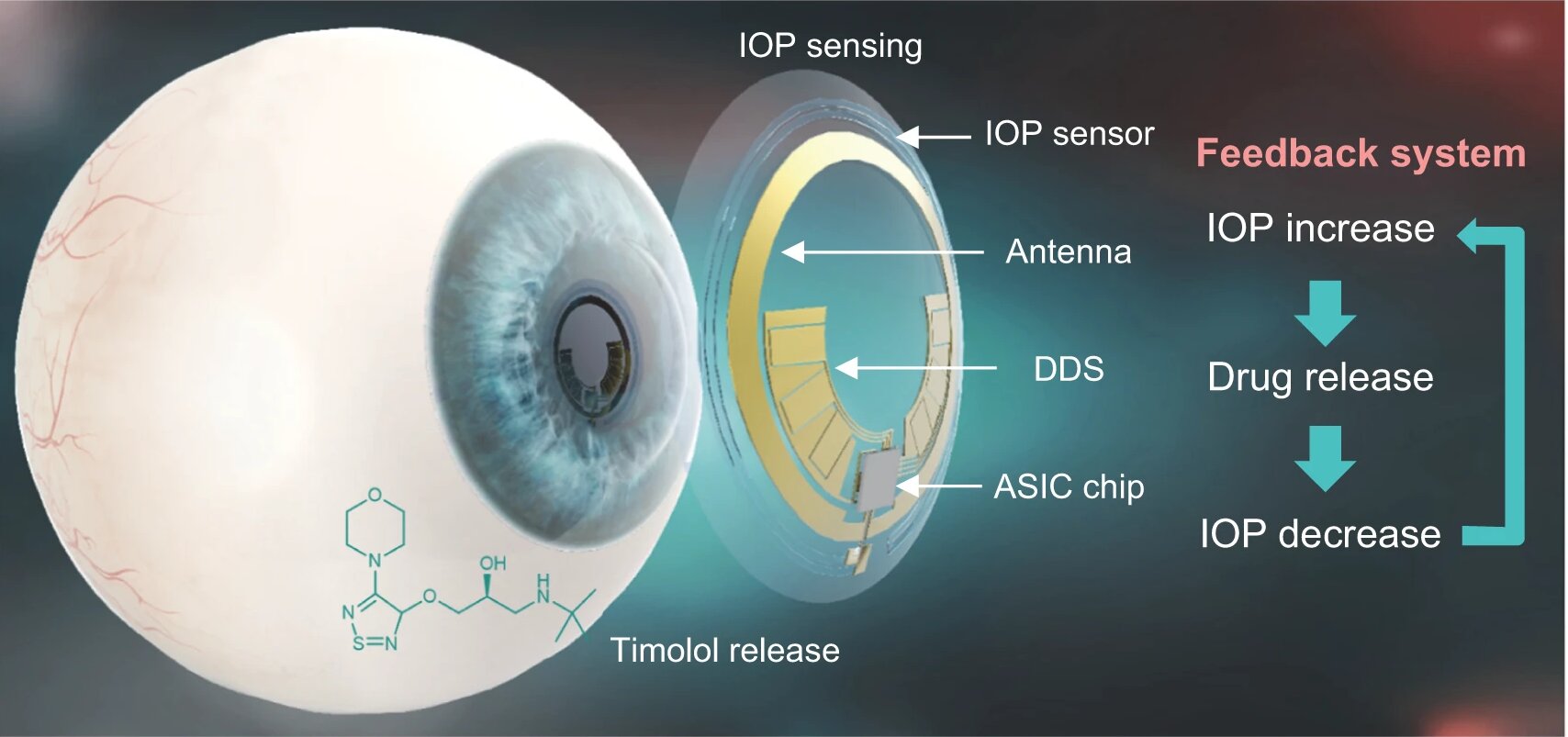
The next 10–15 years will bring revolutionary innovations.
Implantable Wearable Chips
Small implants under the skin will monitor health continuously.
Smart Contact Lenses
Lenses that measure:
- Glucose
- Pressure
- Biomarkers
- AR overlays
Fully Non-Invasive Blood Monitoring
Glucose, cholesterol, hydration—all without needles.
AI for Mental Performance
Wearables will:
- Enhance focus
- Improve memory
- Track cognitive load
Emotion-Adaptive Devices
AI will detect emotional states and adjust:
- Music
- Light
- Meditation guidance
Smart Clothing Integration
Clothes that:
- Monitor posture
- Adjust temperature
- Track movement
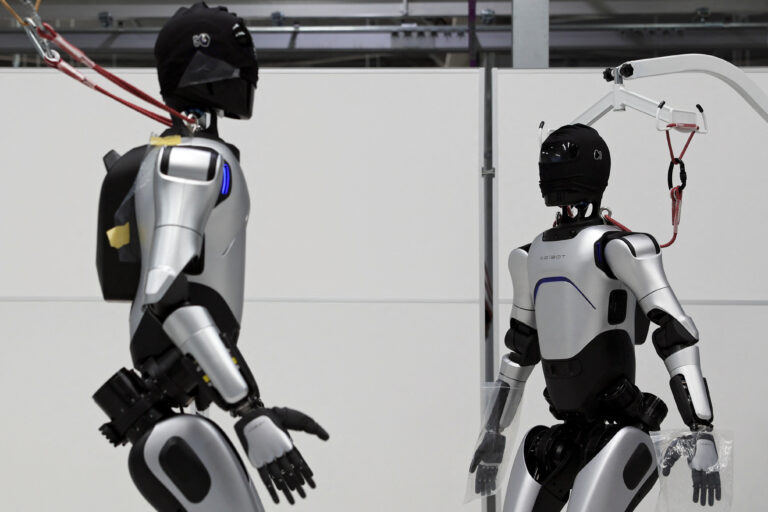
Human Augmentation
Wearables will enhance rather than just monitor:
- Strength
- Endurance
- Cognition
Preventive Health Revolution
AI wearables will shift healthcare from treatment to prevention.
Social Impact of AI Wearables
AI wearables will reshape society in important ways.
Improved Public Health
Population-level data leads to early outbreak detection.
Better Work Environments
Wearables reduce stress and increase productivity.
Aging With Dignity
Elderly individuals maintain independence longer.
Transformation of Medicine
Doctors rely on continuous biometric data instead of occasional check-ups.
Ethical Debates
Concerns about surveillance, data access, and AI autonomy will grow.
Conclusion
AI wearables are transforming how humans understand their bodies, make decisions, and manage their health. These devices are evolving rapidly—from simple trackers to intelligent companions capable of predicting risks, enhancing performance, and supporting mental well-being.
In 2025, the world stands on the edge of a personal health revolution powered by real-time data and artificial intelligence. Over the next decade, AI wearables will become more accurate, more comfortable, and more integrated into daily life—eventually becoming essential tools for health, productivity, and self-improvement.
The future is wearable—and AI will be guiding every step, heartbeat, breath, and moment.